Asbestos Recycling
Asbestos recycling offers a safer way to dispose of toxic asbestos-containing materials without putting them in a landfill. However, asbestos can’t be recycled in the way that paper and plastic are. Instead, a set of industrial processes transforms the asbestos into glass, gel, or powder that can be safely reused. Learn more about asbestos recycling and options for safely disposing of asbestos-containing materials.

What Is Asbestos Recycling?
Traditional recycling, the kind we do with paper, glass, or aluminum, simply transforms a material into a new form of itself. Asbestos recycling is very different. The goal is not to reuse asbestos, but to turn it into other harmless substances.
Asbestos fibers are dangerous because if you breathe them in or swallow them, you could develop mesothelioma or other serious illnesses later in life. Recycling processes use high heat, chemical treatment, machinery, or a combination of all three to chemically transform asbestos.
 The end product is typically glass or silica gel that carries none of the health risks of asbestos and can be safely used as a component in road construction, building materials, tiles, and other industrial applications.
Recycling asbestos is a promising option to reduce the risks of this toxic material — but for those who’ve already developed mesothelioma, we may be able to help. Get a free case review now to learn about compensation for treatments and other costs.
Types of Asbestos Recycling Options
There are three main methods for recycling asbestos, each relying on different options to break down this toxic material. These include melting the fibers into glass using high heat, chemically treating asbestos so it transforms into silica gels, and mechanically grinding asbestos products to produce a safe powder.
Asbestos Recycling Through Thermal Treatment (Vitrification)
The most widely studied asbestos recycling method uses extremely high temperatures, typically between 1,000°C and 1,500°C (roughly 1,800°F to 2,732°F), to melt asbestos fibers into glass or a glass-ceramic material.
Here’s how asbestos vitrification works:
- Asbestos-containing materials are crushed down and sent to a furnace
- Ovens use plasma torches to melt asbestos
- Compounds that make up asbestos recombine into glass
The resulting glass can be used as a raw material in the production of ceramic tiles, road aggregate, and construction composites.
Another option called microwave-assisted thermal treatment has shown promise in laboratory settings for processing smaller volumes of asbestos more efficiently, and at lower energy costs than conventional vitrification.
Asbestos Recycling Through Chemical Treatment
Chemical approaches use strong acids or alkalis, commonly sodium hydroxide (caustic soda), to dissolve asbestos fibers at normal or slightly elevated temperatures.
The chemical reaction breaks down the fibers’ structure, producing silica gels and metal compounds that are safe to handle.
Some asbestos recycling options combine chemical and thermal treatment, reducing the temperatures needed for vitrification and lowering the overall costs. These hybrid approaches are helping asbestos recycling become more financially viable when compared to landfill disposal.
Asbestos Recycling With Mechanochemical Treatment
Mechanochemical processing uses mechanical grinding to destroy asbestos fibers through force.
Here’s how mechanochemical asbestos recycling works:
- Asbestos-containing materials are sent to a ball mill
- The mill’s grinds down the asbestos fibers at the atomic level
- The crushed fibers become a chemically safe powder
Mechanochemical treatment can neutralize a specific type of asbestos fiber called chrysotile asbestos effectively. For example, chrysotile asbestos grinded with potassium phosphate created a safe-to-use fertilizer in a recent study from the Journal of Environmental Management.
However, other types of asbestos fibers, including crocidolite and amosite, are generally harder to process by mechanical means alone and may require additional treatments.
Asbestos Recycling vs. Asbestos Abatement and Landfill Disposal
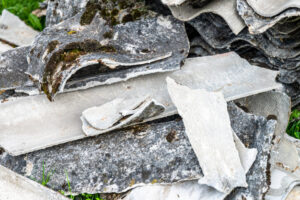 Asbestos recycling is not as commonly used as abatement (sealing away asbestos-containing products) or landfill disposal, which are the other methods used to protect people from this toxic material.
However, recycling is the only option that turns asbestos into harmless materials. If asbestos recycling becomes more cost-effective and convenient, it could be more commonly used.
Disposal of Asbestos in Landfills
The vast majority of removed asbestos in the United States is sealed in double-lined bags or containers and buried in approved hazardous waste landfills. This option is effective as long as the landfill remains intact and undisturbed.
However, disposing of asbestos in landfills has drawbacks:
- The materials consume landfill space permanently
- The asbestos could still pose a threat if disturbed
- As landfill space decreases, transportation and disposal costs rise
Disposal of asbestos in landfills is regulated under the National Emission Standards for Hazardous Air Pollutants (NESHAP) and the Resource Conservation and Recovery Act (RCRA), which set strict requirements for packaging, transport, and disposal documentation.
Asbestos Abatement and Encapsulation
Asbestos abatement refers to actions that help safely seal away or remove asbestos-containing materials, typically from homes or other buildings. If you find asbestos in your home or a building, you can consult a licensed abatement professional for next steps.
Asbestos abatement typically has two options:
- Encapsulation: Asbestos-containing products only pose a threat if they are disturbed or damaged, because they can release fibers into the air. Asbestos materials that are in good shape can often be safely managed through encapsulation, in which a sealant is applied to prevent fibers from being released. This is often used for floor tiles, pipe insulation, and ceiling materials.
- Removal: In more serious cases, abatement professionals may recommend removal and renovations if asbestos-containing materials cannot be safely encapsulated. In many cases, the materials will then be sent to a landfill for disposal.
“Encapsulation is more affordable and is usually the better choice for intact materials, or for low-traffic locations. Meanwhile, asbestos removal is more labor-intensive and expensive, but can offer complete peace-of-mind that your building’s air is clean and safe to breathe.”
– Prime Restoration & Remediation
If a building only undergoes encapsulation, the asbestos may still need to be properly disposed of or recycled during a major renovation or demolition at some point in the future. As a result, this option offers a long-term, but not permanent, solution.
Why Asbestos Recycling Isn’t Often Used
The U.S. Environmental Protection Agency (EPA) reports that while tens of millions of pounds of asbestos-containing material are collected annually in the United States, only less than 1% is recycled rather than landfilled.
Right now, asbestos recycling is not seen as a fully viable option, even though it is arguably the most effective way of completely eliminating the risks of this harmful substance.
Downsides to asbestos recycling include:
- Financial expense: Asbestos recycling is significantly more expensive than landfill disposal. In some analyses, recycling costs roughly two to three times as much per pound of material processed.
- Lack of infrastructure: Landfills across the U.S. accept asbestos. Asbestos recycling technology is still emerging, so there are very few ways for the average person to recycle it.
However, as landfill capacity decreases and technology advances, asbestos recycling could potentially become more common.
In Europe, several countries, including Italy, France, and Belgium, have invested in commercial-scale asbestos recycling infrastructure, driven by stricter landfill regulations and a recognition that legacy asbestos waste needs a more permanent solution than burial.
Additionally, research institutions in Japan and Australia have also produced significant advances in thermal and mechanochemical processing methods.
Where Asbestos Is Still Found Today
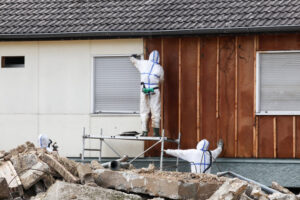 Asbestos was used so extensively in American construction and manufacturing for much of the 20th century that it remains present in an enormous number of structures and products, many still in active use.
Residential Buildings
Homes built before the early 1980s are the most likely to contain asbestos-based materials. In fact, about 30 million homes in the U.S. still have asbestos materials inside, per PBS.
Common asbestos-containing materials in homes include:
- Ceiling tiles, like “popcorn” or textured ceilings
- Drywall joint compound
- Electrical panel and wire insulation
- Insulation in furnaces, boilers, pipes, and ducts
- Roof shingles, exterior siding, and panels
- Vinyl floor tiles and their adhesive backing
- Window caulking and glazing putty
These building products only pose a threat if they’re disturbed or damaged, at which point fibers could be released into the air. Encapsulation, removal, and sometimes recycling asbestos can all be used to help safely deal with these dangerous building materials.
Call (877) 449-6583 now for help if you or someone you love developed mesothelioma after handling asbestos-containing materials. You may be eligible for compensation to cover health care costs and other bills.
Commercial and Industrial Buildings
Commercial buildings, schools, hospitals, and industrial facilities built before the 1980s often contain asbestos in similar locations to residences, but on a much larger scale.
Schools in particular came under scrutiny with the passage of the Asbestos Hazard Emergency Response Act (AHERA) in 1986, which required inspection and ongoing management of asbestos-containing materials in school buildings nationwide.
U.S. Navy Ships and Military Facilities
The military was one of the biggest consumers of asbestos throughout the 20th century, particularly the U.S. Navy. Virtually all U.S. Navy ships built before 1980 contained asbestos products due to government mandates.
Asbestos products used on U.S. Navy ships included:
- Boilers
- Deck tiles
- Engine components
- Fireproofing
- Gaskets
- Insulation
- Pipe fittings
- Wires
As a result, U.S. Navy veterans and shipyard workers run a very high risk of mesothelioma and other asbestos-related diseases in the present.
Additionally, U.S. military bases of all branches relied on asbestos-containing materials like cement, tiling, insulation, and more, putting those who constructed or renovated them at risk of exposure.
Vehicles and Car Parts
Asbestos was a standard component in automotive friction materials because of its resistance to heat and friction.
Common car parts that contained asbestos included:
- Brake pads
- Brake linings
- Clutch facings
- Transmission components
While the domestic automotive industry has largely transitioned away from asbestos, imported vehicle parts from countries where asbestos remains legal continue to surface in the U.S. market, and mechanics working on older vehicles may still encounter asbestos-containing brake or clutch components.
Regulations for Asbestos Removal, Disposal, and Recycling
The handling, removal, transport, and disposal of asbestos in the U.S. is governed by federal laws, with additional state and local requirements that vary significantly.
As asbestos recycling continues to be studied as a viable option, regulations and laws may be updated to accommodate it.
Notable asbestos disposal laws include:
- Asbestos Hazard Emergency Response Act (AHERA): This law requires local education agencies to inspect school buildings for asbestos-containing materials, develop management plans, and notify parents, teachers, and staff about asbestos. Re-inspections are required every three years.
- National Emission Standards for Hazardous Air Pollutants (NESHAP): This sets work practice standards for demolition and renovation projects involving asbestos, including requirements for prior notification, proper removal, and approved disposal at licensed facilities.
- The Toxic Substances Control Act (TSCA): The TSCA grants the EPA authority to regulate asbestos, including recent attempts to ban new uses.
- State and local laws: Many states have enacted asbestos regulations that go beyond federal minimums. States like California, New York, and Illinois have particularly robust licensing and notification rules for asbestos contractors. Property owners undertaking renovation or demolition projects should contact their state environmental agency to understand requirements before work begins.
Additionally, the Occupational Safety and Health Administration (OSHA) sets permissible limits (PELs) for occupational asbestos exposure. It also requires employers to provide respirators and protective clothing, conduct air monitoring, and train workers who may encounter asbestos.
Is asbestos banned? No, asbestos is fully not banned in the U.S. currently. While the EPA proposed a ban on ongoing uses of asbestos in 2024, it is currently facing legal challenges. The potential ban also does not “legacy asbestos,” those being materials left behind in older buildings, vehicles, and ships.
Get a free case review now if you or a loved one was ever exposed to asbestos and now has mesothelioma. We may be able to determine your exposure and pursue compensation for expenses.
Testing a Home or Building for Asbestos
If you own or live in a building constructed before the early 1980s and plan to renovate, remodel, or demolish any part of it, testing for asbestos before work begins is important, and sometimes legally required.
Testing for asbestos can allow you to know for sure that you won’t disturb any materials during renovations. If asbestos is found, you can then work with professionals to remove it or seal it.
Steps to testing buildings for asbestos include:
- Avoiding possible asbestos in your home: Don’t try to deal with products that may contain asbestos yourself, as you could inadvertently release fibers into the air. The EPA also doesn’t recommend using at-home asbestos test kits to retrieve samples, as these can also kick up fibers.
- Hiring a qualified inspector: The EPA suggests hiring a trained and accredited asbestos inspector. An inspector will typically collect bulk samples of suspect materials and submit them to a laboratory for analysis.
- Making a decision: Depending on the results of the inspection, you may simply need to monitor the materials, or work with licensed contractors to abate or remove them.
“Removal is complex and must be done only by a trained and accredited asbestos professional. Improper removal may actually increase your and your family’s exposure to asbestos fibers.” – U.S. Environmental Protection Agency
Before hiring any asbestos professional, verify that they hold federal accreditation and any state-required licenses. The EPA’s asbestos training and certification program operates under AHERA, and many states have their own licensing boards. You can verify a contractor’s credentials through your state’s environmental or labor agency.
Right now, it may not be possible for average contractors you work with to recycle asbestos as the infrastructure isn’t set up. However, removal or encapsulation are excellent ways to help keep you and your family safe.
The Future of Asbestos Recycling and Next Steps
Asbestos recycling is still emerging in the U.S. today, so it is not widely used right now. However, it may one day be a viable option for turning this toxic material into products that are safe to use.
If you’re worried about asbestos in your home right now, you can work with accredited professionals to have it sealed or sent to a landfill. These are excellent options to ensure your family gets peace of mind.
Removing, sealing, or recycling asbestos materials can help prevent exposure, but there’s no way to lower the risks of mesothelioma if you already came in contact with this toxic substance.
If you or someone you love has mesothelioma, we may be able to help recover compensation for treatments and other costs. Call (877) 449-6583 or get a free case review to see how we can assist you.
Asbestos Recycling FAQs
Can I dispose of asbestos myself?
No, the EPA doesn’t recommend disposing of asbestos yourself. The agency advises working with licensed asbestos contractors who can assess, remediate, and remove asbestos-containing materials.
Typically, asbestos disposal involves placing the harmful materials in durable plastic bags and thoroughly cleaning the work site to ensure stray asbestos fibers and dust don’t linger.
What is the cheapest way to get rid of asbestos?
The most cost-effective way to get rid of asbestos is to actually leave it in place and safely seal it. This is known as encapsulation, and is cheaper than removal and disposal per professional remediation companies.
To fully get rid of asbestos-containing materials, you’ll need to work with licensed contractors who can remove it while limiting your exposure risk.
Asbestos recycling is the most expensive option. It’s arguably the most effective since it turns asbestos materials into harmless substances, but it’s also not typically available due to cost and technological limitations in the U.S.
Is a little bit of asbestos exposure OK?
No, even a little bit of asbestos exposure is dangerous. There’s no safe level of exposure to asbestos fibers, according to OSHA. Even being exposed to asbestos once could put you at risk of mesothelioma or other asbestos-related diseases 20-50 years later.
If you’re worried about asbestos in your home, don’t touch it or go near it. Consult with professional contractors who can assess your level of risk and recommend ways to keep you and your family safe — typically through removal, encapsulation, or, in rare situations, recycling.
Our team can also help you pursue compensation if you have mesothelioma. Get a free case review now to find out your eligibility.
Is asbestos banned in the United States?
Not completely. The EPA attempted a comprehensive ban in 1989, but a federal court overturned most of it in 1991. In 2024, the EPA passed a ban on all new uses of asbestos, but it’s currently facing legal challenges and could take years to fully enforce.
Additionally, the EPA’s 2024 ban doesn’t address legacy asbestos-containing products found in older homes, buildings, and other structures, meaning abatement, disposal, and recycling efforts are still crucial to keeping families safe.
How is asbestos recycling different from regular disposal?
Standard disposal of asbestos involves sealing asbestos in approved containers and burying it in a licensed hazardous waste landfill. It can still pose a threat if disturbed, but the risk is very low.
Asbestos recycling uses high heat, chemical treatment, or mechanical processing to turn it into glass, silica, or powder. These products are no longer considered to be asbestos, making them safe to use in industrial and commercial applications.
What should I do if I think I've been exposed to asbestos?
If you believe you’ve been exposed to asbestos, inform your doctor as soon as possible and provide as much detail as you can about the nature, duration, and timing of the exposure.
While there is no treatment to reverse past asbestos exposure, your doctor may recommend screenings to try and detect asbestos-related diseases early on, when they’re more easy to treat.
Call (877) 449-6583 for help affording treatment costs if you or a loved one has developed mesothelioma after asbestos exposure.
How do I find a licensed asbestos abatement contractor?
Your state environmental agency or department of labor typically maintains a list of licensed asbestos abatement contractors. The EPA also offers guidance on finding accredited professionals through its website.
Always verify credentials independently and ask for proof of insurance before signing any contracts.

- International Association of Fire Fighters. “EPA bans carcinogenic asbestos in the U.S.” Retrieved from https://www.iaff.org/news/epa-bans-carcinogenic-asbestos-in-the-u-s/.
- Law360. “Chamber Tells 5th Circ. EPA Asbestos Ban Goes Too Far.” Retrieved from https://www.law360.com/articles/2431425/chamber-tells-5th-circ-epa-asbestos-ban-goes-too-far.
- Occupational Safety and Health Administration. “Asbestos.” Retrieved from https://www.osha.gov/asbestos.
- PBS News. “The stunning truth about asbestos use in the U.S.” Retrieved from https://www.pbs.org/newshour/show/decades-after-proof-of-its-carcinogenic-properties-asbestos-still-surrounds-us.
- Prime Restoration & Remediation. “Asbestos Encapsulation vs. Removal: What’s Best for Your Property?” Retrieved from https://primeremediation.com/encapsulated-asbestos.
- U.S. Consumer Product Safety Commission. “Asbestos In The Home.” Retrieved from https://www.cpsc.gov/safety-education/safety-guides/home/asbestos-home.
- U.S. Environmental Protection Agency. “EPA Actions to Protect the Public from Exposure to Asbestos.” Retrieved from https://www.epa.gov/asbestos/epa-actions-protect-public-exposure-asbestos.
- U.S. Environmental Protection Agency. “Protect Your Family from Exposures to Asbestos.” Retrieved from https://www.epa.gov/asbestos/protect-your-family-exposures-asbestos.